Discover the breathtaking view of Shawnee National Forest in Southern Illinois – home to ancient rock formations, hidden waterfalls, cypress swamps, and unforgettable hiking trails just beyond the classic Route 66 road trip route.
There’s a lot of Illinois that many travellers ever experienced. Beyond the busy highways, historical diners, and famous Route 66 lies a landscape that feels ancient, untamed and very wild. This is a place where towering sandstone cliffs are rising above very dense forests.
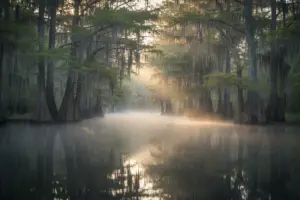
Hidden waterfalls are echoing through the narrow canyons and cypress swamps that are quiet create the scenes that feel more like the deep South than the Midwest. This is Swahnee National Forest one of the most breathtaking and probably overlooked natural destinations in America. This Forest stretches accross nearly 280 000 acres of wilderness that are very protected.
This is a place where geological formations have formed over a long period of time. Be sure not too miss the hidden trails and realize that peace is right around the corner of all of this.
The Route 66 Road Trip Detour That Changes Everything
Why Shawnee National Forest Feels So Different
Within a single road trip, you can experience:towering sandstone bluffslush hardwood forestscrystal-clear creekshidden waterfallsdramatic canyon trailsand ancient cypress swamps filled with massive trees rising from still dark water. It’s the kind of place that constantly surprises you. Make sure to have your camera ready to capture those shots that you can bring home and share.
One moment you’re standing on a panoramic overlook above endless forested hills. The next, you’re walking through a quiet swamp beneath bald cypress trees that look straight out of another world. Shawnee doesn’t feel like the Illinois most people know — and that’s exactly what makes it unforgettable.
When are the Best Time To Visit Shawnee National Forest?
Every season brings a completely different experience to Shawnee.
Spring
Spring transforms the forest into a lush green paradise filled with wildflowers, flowing waterfalls, and comfortable hiking temperatures. Trails are vibrant and alive after winter rains.
Fall
Autumn is arguably the most spectacular season in Shawnee National Forest. From mid-October into early November, the hardwood forests turn brilliant shades of red, orange, and gold. The late afternoon sunlight filtering through the trees creates unforgettable scenery.
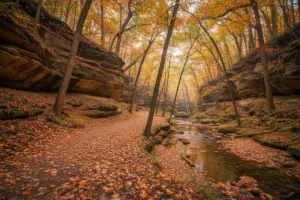
Shawnee National Forest Autumn Trail
Summer
Summer is rich, green, and humid. Early mornings are ideal for hiking before temperatures rise, and the creeks and shaded canyon trails offer a refreshing escape from the heat.
Winter
Winter brings solitude and a completely different kind of beauty. With the leaves gone, the dramatic rock formations become even more visible, and the forest feels quiet, peaceful, and almost meditative.
So you might find that withing each seasonal change it can offer something different, knowing what is offered can make a huge difference on your planning.
Planning Your Visit
Shawnee National Forest is managed by the U.S. Forest Service and is free to enter. There are multiple campgrounds throughout the forest ranging from primitive campsites to more developed camping areas with facilities.
Visitors can also stay in nearby towns like Harrisburg or Carbondale, both of which offer hotels, restaurants, fuel, and supplies for exploring the region. Because many areas of the forest are remote, it’s a good idea to download maps ahead of time and plan your route before heading deeper into the wilderness.
For travelers exploring Route 66, Shawnee National Forest offers something completely unexpected — a chance to step away from the roadside nostalgia and experience one of the Midwest’s most remarkable natural landscapes. It’s quiet here.
Ancient. Peaceful.And once you’ve stood on the cliffs of Garden of the Gods or walked beneath the giant cypress trees of Cache River, you’ll understand why so many people leave Shawnee feeling like they discovered one of America’s best-kept secrets.
Bell Smith Springs offers some of the most beautiful creek-side hiking in the forest — natural arches, swimming holes, and sandstone canyons that reward those willing to explore a little deeper.
Little Grand Canyon is exactly what it sounds like — a dramatic box canyon carved by erosion into the sandstone, with a loop trail that winds through the canyon floor and back along the rim with sweeping views across the forest.
When To Visit
Spring is magical — wildflowers, waterfalls running full, and mild temperatures perfect for hiking. Autumn is arguably the most spectacular season — the hardwood forest ignites in red, orange, and gold from mid-October, and the light through the trees in the late afternoon is something you will remember for the rest of your life.
Summer is lush and green but can be hot and humid in the south of the forest. Early mornings are your best friend. Winter visits are quiet and dramatic — bare trees reveal the rock formations more clearly, and the solitude is profound.
Practical Information
Shawnee National Forest is free to enter and managed by the US Forest Service. There are multiple campgrounds throughout the forest ranging from primitive backcountry sites to developed campgrounds with facilities. The nearest towns for accommodation, fuel, and supplies are Harrisburg to the north and Carbondale to the northwest — both worth a stop in their own right.

Author: Route 66 Finds
Route 66 Finds is your guide to the greatest road trip in America. We uncover the hidden gems, historic landmarks, natural wonders, and unforgettable experiences along the Mother Road — from Chicago to Santa Monica. Discover. Explore. Remember.
2 Comments